Introduction
A conversation pit is a sunken seating area built into a living room floor, designed to encourage intimate and comfortable social interaction. The conversation pit first gained popularity in mid-20th-century modern architecture, especially during the 1950s–1970s, when designers experimented with open-plan living and bold geometric spaces. Today, the conversation pit is experiencing a revival as homeowners seek cozy, immersive environments that break away from traditional flat-floor seating arrangements.
The appeal of a conversation pit lies in its ability to naturally draw people together. Instead of scattered sofas and chairs, the conversation pit creates a central gathering zone where everyone is seated at a lower level, promoting eye contact and relaxed communication. This design not only enhances aesthetics but also transforms how people interact in shared spaces.
Historical Origins and Mid-Century Popularity
The conversation pit originated during the mid-century modern design movement, a period known for innovation, simplicity, and experimentation. Architects like Bruce Goff and Eero Saarinen contributed to the rise of the conversation pit, integrating it into homes, hotels, and public lounges as a symbol of futuristic living. The conversation pit became a hallmark of luxury and modernity during its peak popularity.
In the 1960s and 1970s, the conversation pit was often featured in glamorous homes and television sets, representing sophistication and leisure. However, as architectural trends shifted toward minimalism and accessibility in the 1980s, the conversation pit temporarily declined in popularity. Despite this, the conversation pit never fully disappeared and remained an iconic reference in interior design history.
Architectural Design and Structural Features
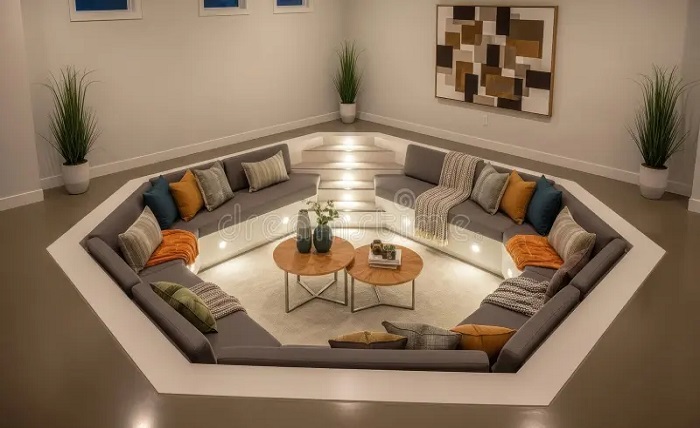
A conversation pit is typically constructed by lowering a section of the floor and surrounding it with built-in seating or modular cushions. The conversation pit often includes steps leading down into the space, creating a seamless transition from the main living area. Designers use symmetry, geometry, and depth to emphasize the unique layout of the conversation pit.
The conversation pit may include integrated lighting, central coffee tables, or even fireplaces to enhance ambiance. Materials used in a conversation pit range from concrete and wood to plush upholstery, depending on the desired aesthetic. Modern architects continue to reinterpret the conversation pit, blending classic structure with contemporary design technologies.
Modern Revival in Contemporary Homes
In modern interior design, the conversation pit has returned as a stylish centerpiece in luxury homes, boutique hotels, and creative spaces. The conversation pit is now often designed with minimalist aesthetics, neutral tones, and modular seating to suit contemporary lifestyles. This revival shows how the conversation pit adapts to current trends while preserving its original social purpose.
Today’s conversation pit is also influenced by open-concept living, where homeowners seek defined yet connected spaces. Smart home integration and flexible furniture have made the conversation pit more practical than ever. Designers are reimagining the conversation pit as a multifunctional area for entertainment, relaxation, and even remote work.
Materials, Textures, and Construction Techniques
Building a conversation pit requires careful planning of structure, depth, and materials to ensure both comfort and safety. The conversation pit often uses reinforced concrete for the base, while seating areas are finished with wood paneling, cushions, or upholstered benches. The choice of materials in a conversation pit significantly influences its mood and durability.
Textures also play a crucial role in a conversation pit, as soft fabrics and layered cushions create a welcoming environment. Some modern conversation pit designs incorporate marble floors, LED lighting, and eco-friendly materials for a sustainable touch. Every conversation pit is a balance between architectural precision and interior comfort.
Social Benefits and Lifestyle Advantages
One of the main advantages of a conversation pit is its ability to encourage meaningful social interaction. The conversation pit naturally brings people closer together, making conversations more engaging and inclusive. Unlike traditional seating layouts, the conversation pit eliminates barriers and fosters a sense of unity.
A conversation pit also enhances relaxation by creating a cozy, enclosed environment that feels separate from the rest of the home. Families often find that the conversation pit becomes a favorite gathering spot for movie nights, discussions, and casual lounging. The conversation pit is not just a design feature—it is a lifestyle enhancer that promotes connection.
Challenges, Safety Considerations, and Maintenance
Despite its appeal, a conversation pit comes with certain challenges, particularly regarding accessibility and safety. The conversation pit involves steps or a lowered floor, which may pose difficulties for children, elderly individuals, or people with mobility issues. Designers must carefully plan the conversation pit to ensure it is safe and user-friendly.
Maintenance is another consideration for a conversation pit, as recessed areas can collect dust and require regular cleaning. Additionally, remodeling a conversation pit in existing homes can be costly due to structural modifications. However, with thoughtful planning, a conversation pit can remain both functional and visually stunning.
Styling Ideas and Interior Decoration Tips
Styling a conversation pit allows homeowners to express creativity through furniture, lighting, and decor. A conversation pit can be styled with bold cushions, layered rugs, and statement lighting fixtures to create a warm and inviting atmosphere. Many designers recommend using soft, earthy tones in a conversation pit to enhance comfort.
A conversation pit can also be themed around modern luxury, retro aesthetics, or minimalist design depending on personal preference. Adding plants, textured fabrics, and ambient lighting can elevate the overall feel of the conversation pit. With the right design choices, a conversation pit becomes the centerpiece of any living space.
Conclusion
The conversation pit remains one of the most iconic and emotionally engaging interior design concepts in architectural history. From its mid-century origins to its modern revival, the conversation pit has consistently represented connection, comfort, and creativity. As homes continue to evolve, the conversation pit offers a timeless solution for bringing people together in a shared, intimate environment.
Whether used in a luxury residence or a contemporary apartment, the conversation pit continues to inspire designers and homeowners alike. Its unique combination of form and function ensures that the conversation pit will remain relevant for generations to come, adapting to new styles while preserving its original purpose of fostering human connection.
FAQs
What is a conversation pit?
A conversation pit is a sunken seating area designed into a floor layout, encouraging social interaction and creating a cozy gathering space.
Why was the conversation pit popular in the 1960s?
The conversation pit became popular in the 1960s due to mid-century modern design trends that emphasized openness, innovation, and social living spaces.
Is a conversation pit practical for modern homes?
A conversation pit can be practical in modern homes when designed with safety, accessibility, and flexible furniture in mind.
What materials are used in a conversation pit?
A conversation pit typically uses concrete, wood, cushions, and upholstery, with modern versions incorporating glass, metal, and LED lighting.
Can a conversation pit be added to an existing house?
Yes, a conversation pit can be added to an existing house, but it requires structural modification and professional architectural planning.